One extra push-up every day

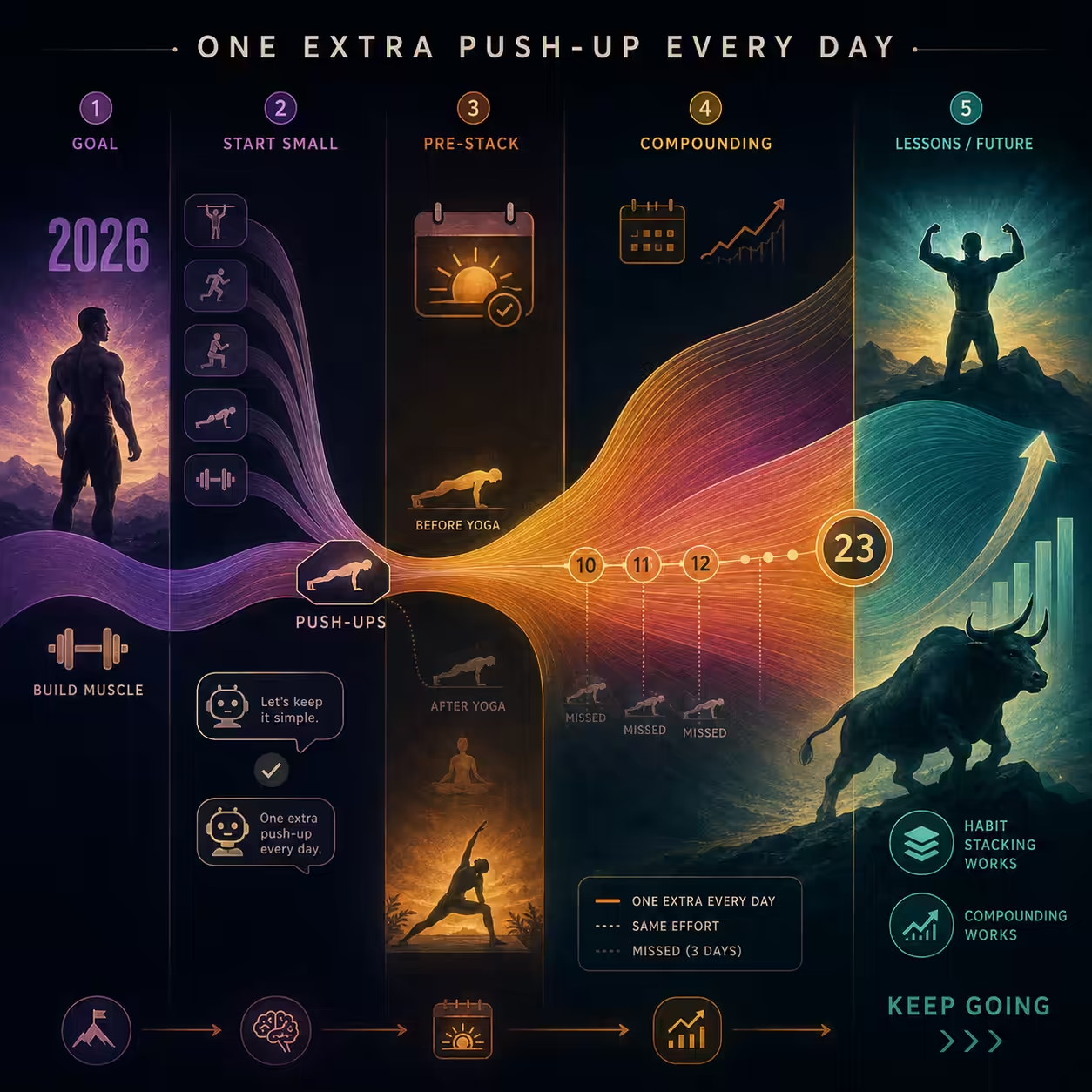
I’m doing one extra push-up every day. One of my 2026 goals is to build muscles. I haven’t done anything about it until May. This month, I figured I would do the absolute minimum, at least to get started, because I seem to have starting trouble more than anything else. I asked ChatGPT: I want to build muscles. What’s the most effective thing that I can do that would take no more than one minute that I can practice every day without any equipment and I can do this anywhere and will have the most impact on building muscles? Research, give me the top five options and recommend one for me. ...
Correcting instruction debt

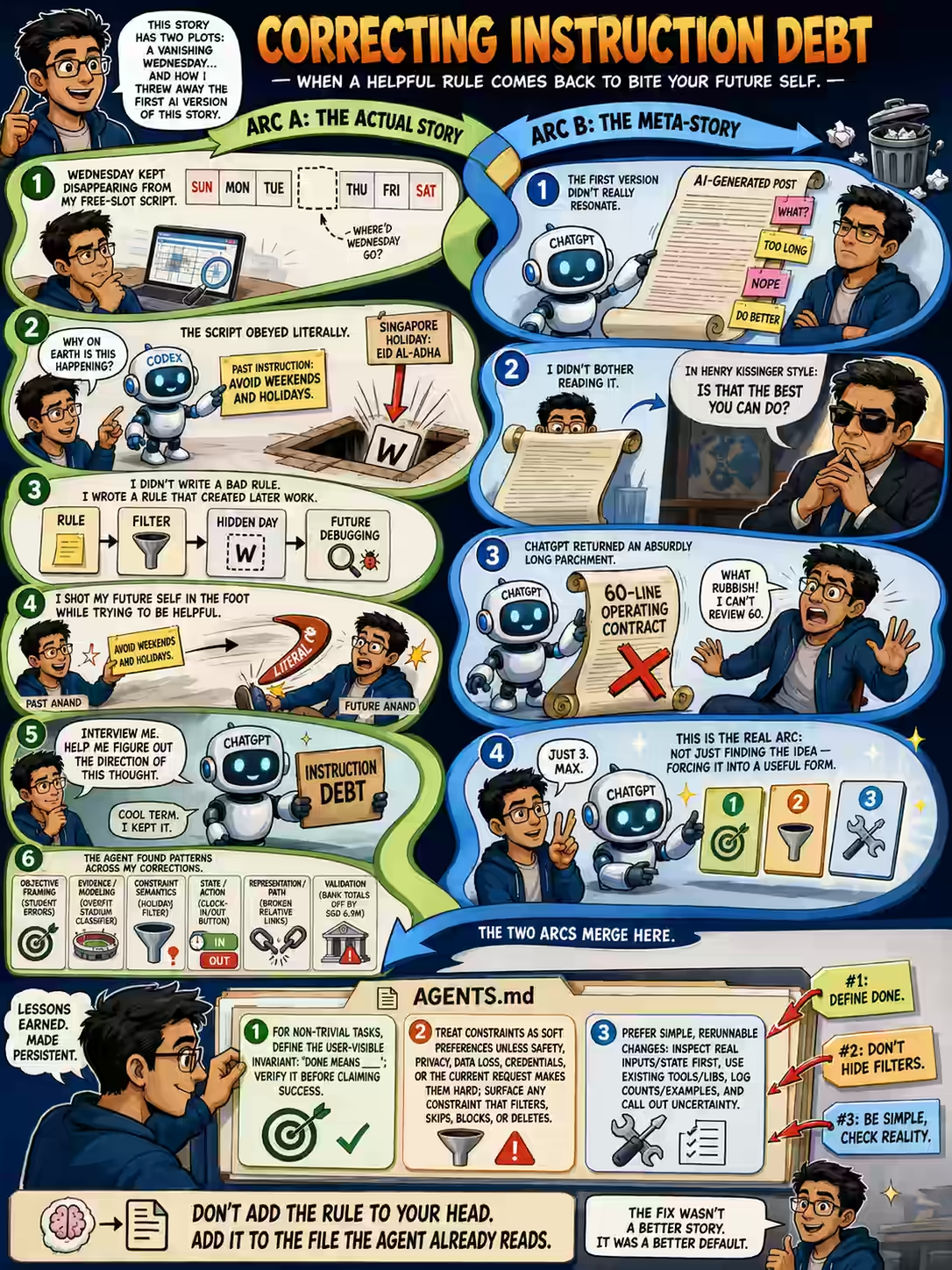
Here’s another AI-generated post, with Anand editor notes. But I’ve also added my own version of the post below. I told my “find a free calendar slot” script to “Avoid weekends and holidays”. Wednesday vanished. Turns out it’s a Singapore holiday (Anand: It’s Eid al-Adha), — irrelevant for the people I was meeting in other zones. I’d debugged my own helpful rule. (Anand: What? What does “debugged my own helpful rule” even mean?) ...

Where Enterprise AI is headed

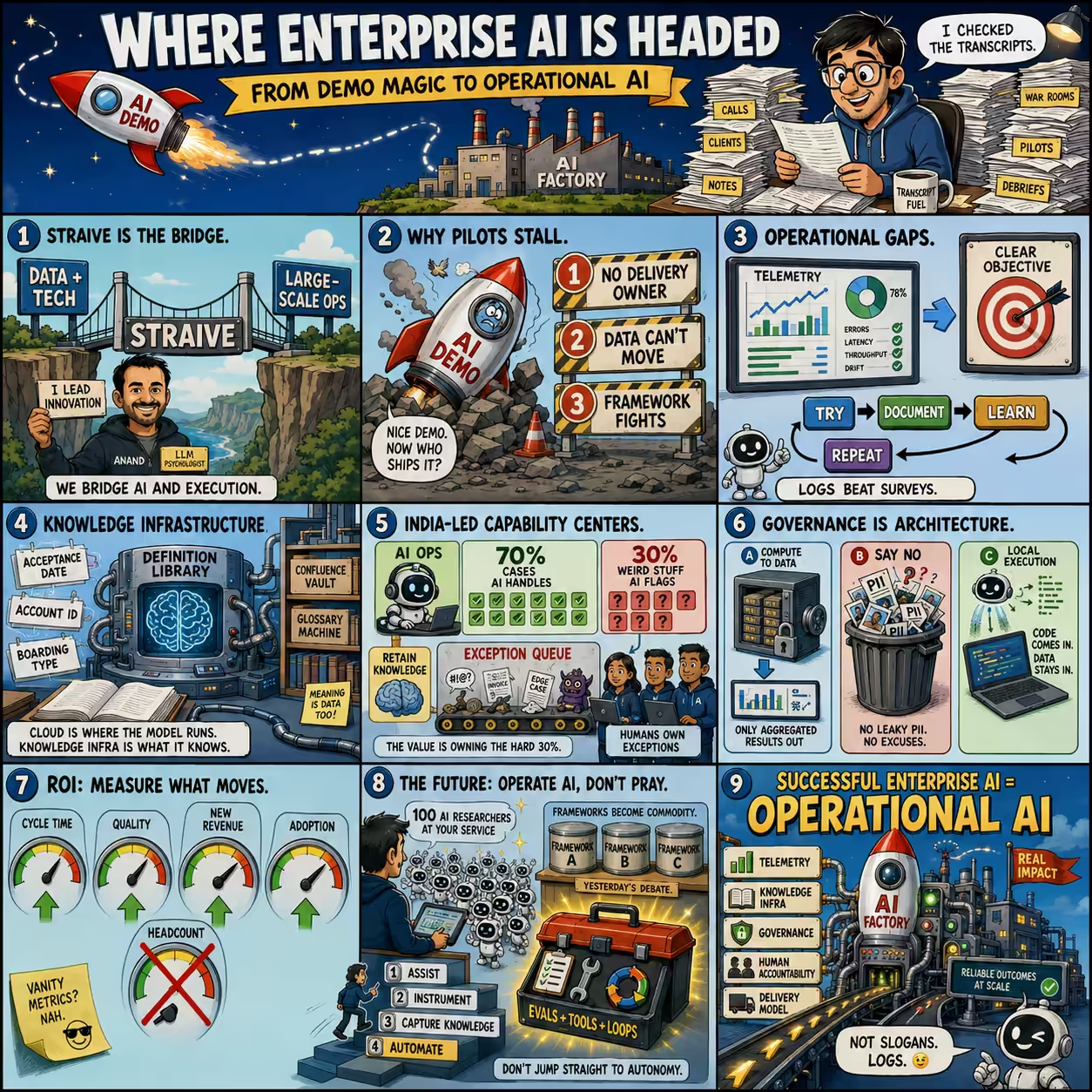
A podcast host sent me eight questions. Instead of rehearsing answers in my head, I used ChatGPT with Local MCP to read 6 months of call transcripts and find the best examples: Iteration 1: Here are questions I have been asked to answer in a podcast. Help me prepare with examples. For each question, go through my transcripts or emails and find examples relevant to the question and share (for each relevant example) a summary, how it’s relevant, and the relevant verbatim quotes from the transcript. Iteration 2: Mention WHO said it. Emphasize the most important parts. Do a second pass. More examples. Disprove your own hypotheses with evidence to the contrary and retain what remains robust. Iteration 3: Do a third pass. Find more real-life examples. Try and disprove yourself even harder. Share the best examples for what survives - not all. Same format. Iteration 4: Ensure diversity of client examples. For example, in Q2, all three are the same client. Extend to add / replace examples - ideally with better ones. Then I used Claude with examples of my writing style to summarize it in my voice. ...

Agent-consumable content

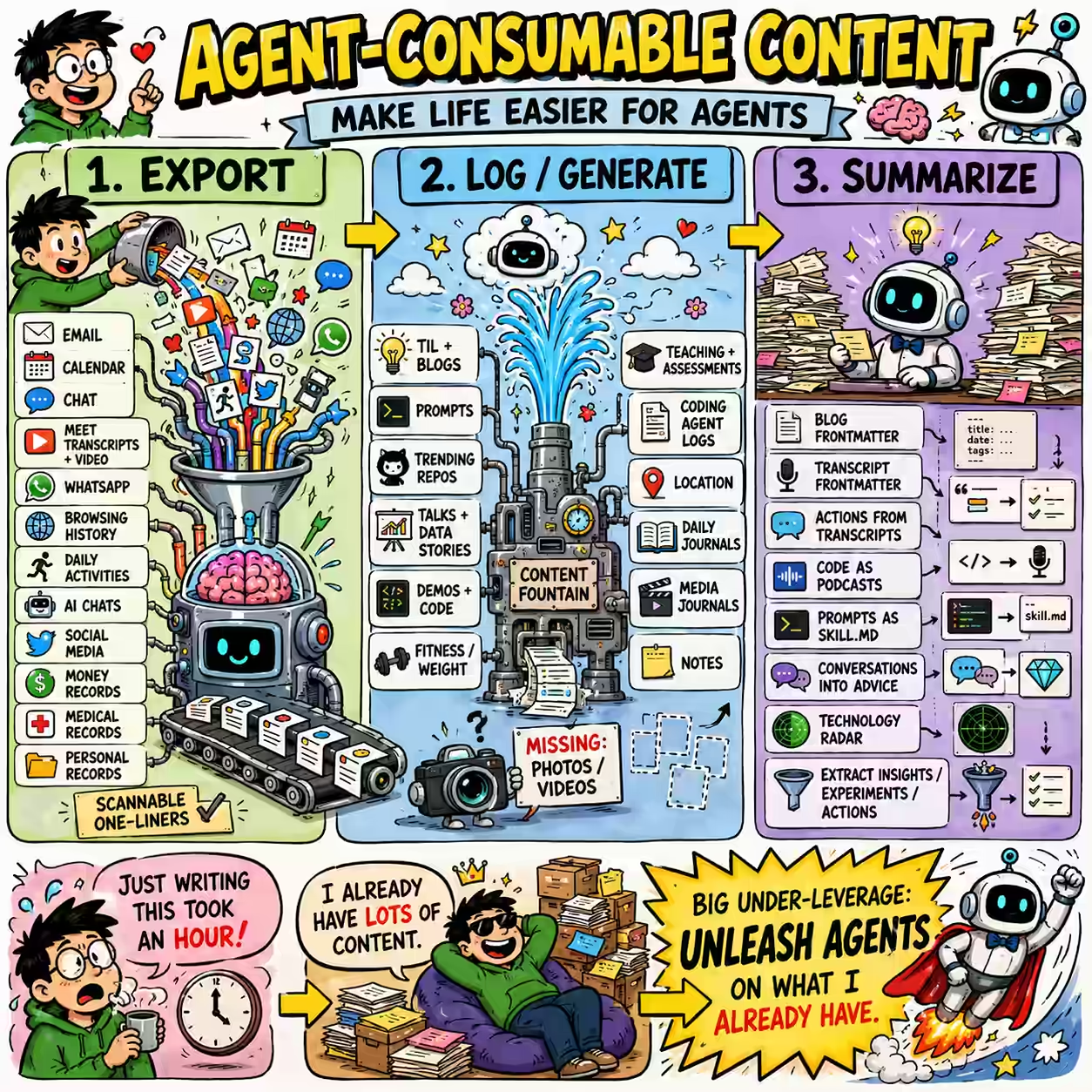
I’m making more and more of my content agent-consumable, i.e. easier for ChatGPT, Claude Code, etc. to read, in three ways. One, I export content in an agent-friendly way. Google email, calendar, chat. I use gws to back up into scannable one-line entries. Meet recordings. I back up transcripts and videos (with a compact audio copy). WhatsApp chats that I back up into similar one-liners. Browsing history by exporting my Edge history SQLite database. Daily activities by integrating the above with my command line and commit history. AI conversations by exporting them manually or via bookmarklets. Social media records like LinkedIn invites/conversations, Twitter, Hacker News, Discourse, etc via bookmarklets or scripts. Financial records like bank statements, receipts, payslips, tax filings, utility payments, rentals, property records, investments, insurance, pensions, invoices, credit scores, etc. by exporting them manually. Medical records like tests, prescriptions, doctor visits, etc. by exporting them manually. Personal records like certificates, educational records, CV, passport / visa applications, etc. by exporting them manually. Two, I log / generate more content. For example: ...

How I use Local MCP

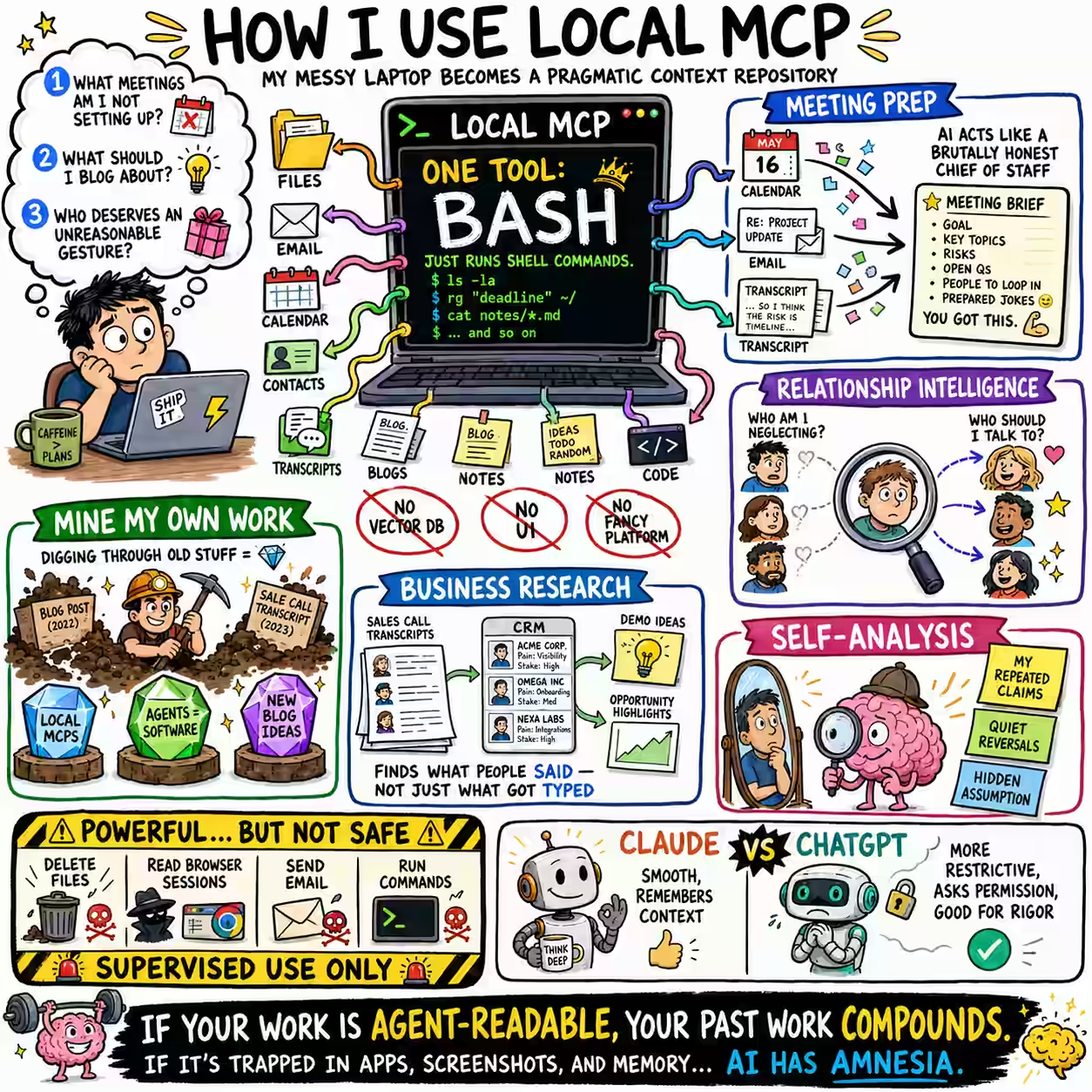
I’d love for Claude or ChatGPT to answer questions like: What meetings am I not setting up that I really should be? or: Based on my activities since 9 May 2026, what should I blog about? or: Who in my professional life most deserves an unreasonable gesture? From data. My files, emails, calendar, contacts, transcripts, blogs, notes, code, browsing history, logs, random Markdown files I forgot I wrote. Hence, a Local MCP. ...

Google Meet captions as a local transcript recorder

I’m a man of simple needs. All I want is: when I’m on Google Meet, I turn on captions. I wanted to click a bookmarklet and save those captions into a local Markdown file. (So that an AI agent can guide me from it.) Hence, Google Meet Captions. The code is in gmeetcaptions/. Drag the button to your bookmarks bar. Join a Meet. Turn on captions. Click it. You get a tiny panel with two buttons: Copy and Start Recording. ...

How the Innovation Team works

Based on 44 meeting recordings from February to late April 2026, here’s how Straive’s small team (3-6 people at any time, mostly freshers and interns) produce a continuous stream of client-facing demos across topics as diverse as image filtering, geospatial analysis, insurance contract verification, NFL medical scoring, OCR benchmarking, and song similarity clustering — often with a 24–48 hour turnaround from assignment to demo. Here is how the team works: ...

My food preferences

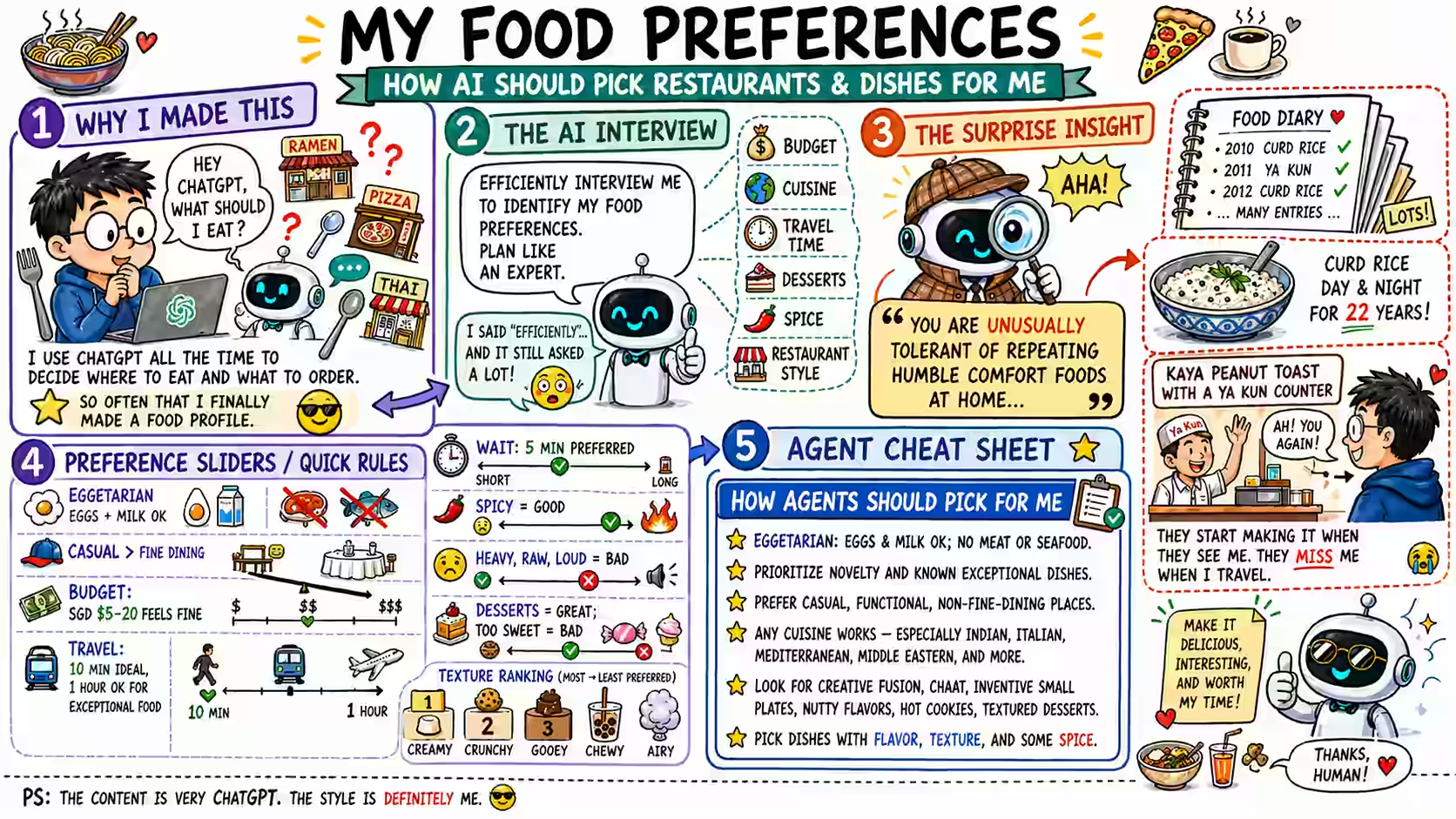
I use ChatGPT to recommend which restaurant I should eat at and what food I should eat. So often that I decided to share a profile of my eating preferences. But rather than think about it and type it myself, I asked it to Efficiently interview me to identify my food preferences. Document it for AI agents to help me pick restaurants. Plan like an expert. ...

Workshops help AI adoption

To teach a mindshift change like AI adoption, I’ve tried to: Workshop: get them to do it. “Let’s try something. Can you share your screen?” Live-code: show them how. “I’ll share screens and tyep this.” Demo: show what’s possible. “Here’s what I built.” Talk: explain it. “Here’s something we can build.” Interview: ask them about it. “What do you think?” Listen: let them yap. The most effective are on top. ...

Flight Mode Emotions

At Changi Airport, I arrived 2.5 hours early and was worried that the flight was boarding on time - because I wanted to charge my laptop so it would work longer on a 6-hour flight to Delhi. I was also sad that it was only a 6-hour flight Delhi - it won’t be enough to read all my pending reading material. The only time I get to read stuff (instead of vibe-coding) is on a flight, with no WiFi. ...

How I use AI to teach

I’ve been using AI in my Tools in Data Science course for over two years - to teach AI, and using AI to teach. I told GitHub Copilot (prompt) to go through my transcripts, blog posts, code, and things I learned since 2024 to list my every experiment in AI education, rating it on importance and novelty. Here is the full list of my experiments. 1. Teach using exams and prompts, not content ⭐ Use exams to teach. The typical student is busy. They want grades, not learning. They’ll write the exams, but not read the content. So, I moved the course material into the questions. If they can answer the question, great. Skip the content. Use AI to generate the content. I used to write content. Then I linked to the best content online – it’s better than mine. Now, AI drafts comics, interactive explainers, and simulators. My job is to pick good topics and generate in good formats. Give them prompts directly. Skip the content! I generated them with prompts anyway. Give students the prompts directly. They can use better AI models, revise the prompts, and learn how to learn with AI. ⭐ Add an “Ask AI” button. Make it easy for students to use ChatGPT. Stop pretending that real-world problem solving is closed-book and solo. ⭐ Make test cases teach, not just grade. Automate the testing (with code or AI). Good test cases show students the kind of mistake they may - teaching them, not just grading them. That’s great for teachers to analyze, too. Test first, then teach from the mistakes. Let them solve problems first. Then teach them, focusing on what failed. AI does the work; humans handle what AI can’t. This lets us teach really useful skills based on real mistakes. 2. Make cheating pointless through design, not detection ...

Local context repositories for AI

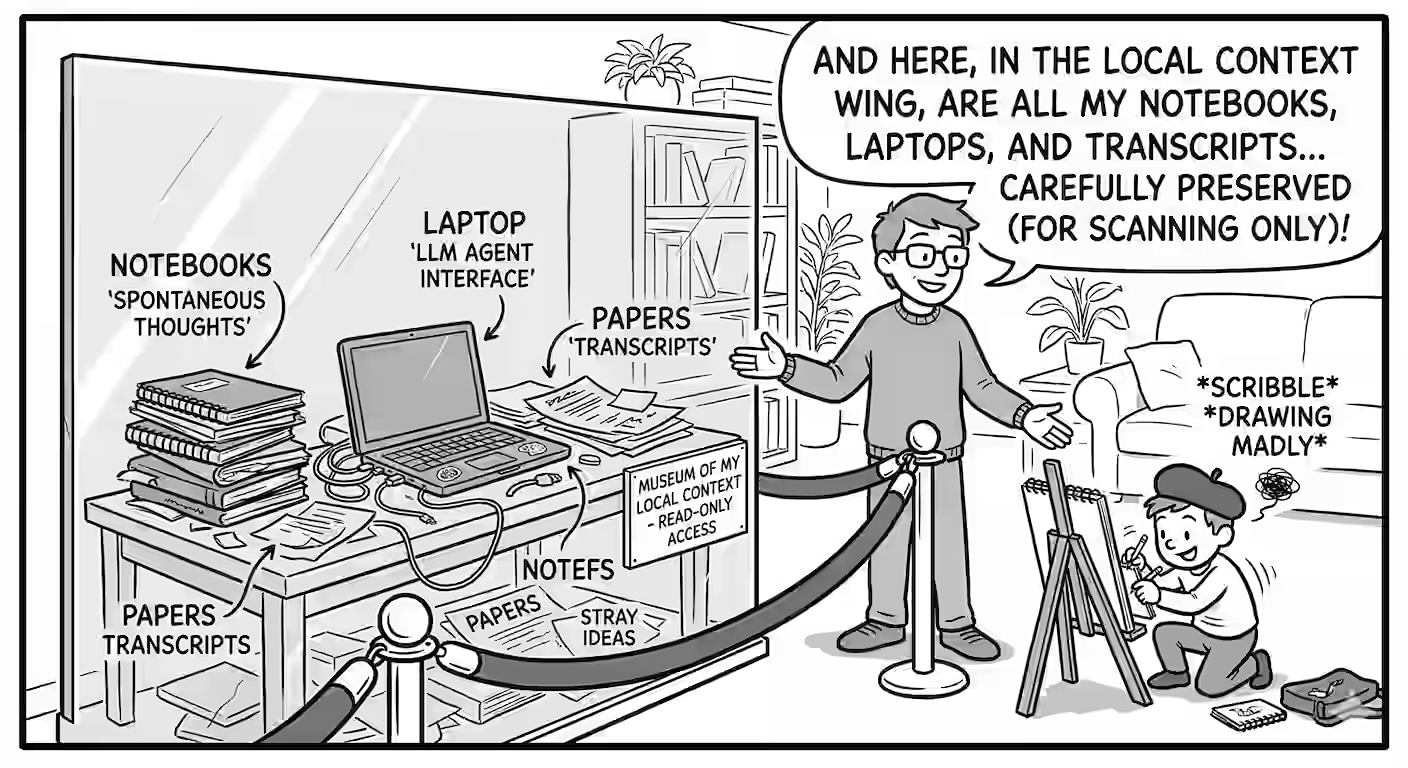
When people ask me for connections, I share my LinkedIn data and ask them to pick. This week, three people asked for AI ideas. I shared my local content with AI coding agents and asked them to pick. STEP 1: Give access to content. I use a Dockerfile and script to isolate coding agents. To give access, I run: dev.sh -v /home/sanand/code/blog/:/home/sanand/code/blog/:ro \ -v /home/sanand/code/til:/home/sanand/code/til:ro \ -v /home/sanand/Dropbox/notes/transcripts:/home/sanand/Dropbox/notes/transcripts:ro This gives read-only access to my blog, things I learned, transcripts, and I can add more. (My transcripts are private, the rest are public.) ...

Blog embeddings map

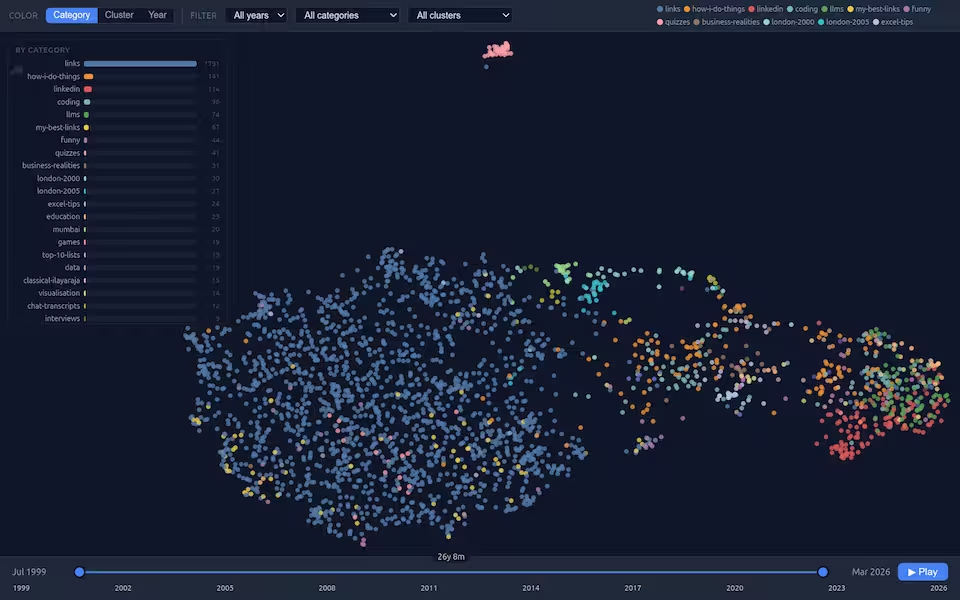
I created an embedding map of my blog posts. Each point is a blog post. Similar posts are closer to each other. They’re colored by category. I’ve been blogging since 1999 and over time, my posts have evolved. 1999-2005: mostly links. I started by link-blogging 2005-2007: mostly quizzes, how I do things, Excel tips, etc. 2008-2014: mostly coding, how I do things and business realities 2015-2019: mostly nothing 2019-2023: mostly LinkedIn with some data and how I do things 2024-2026: mostly LLMs … and this transition is entirely visible in the embedding space. ...

The Future of Work with AI

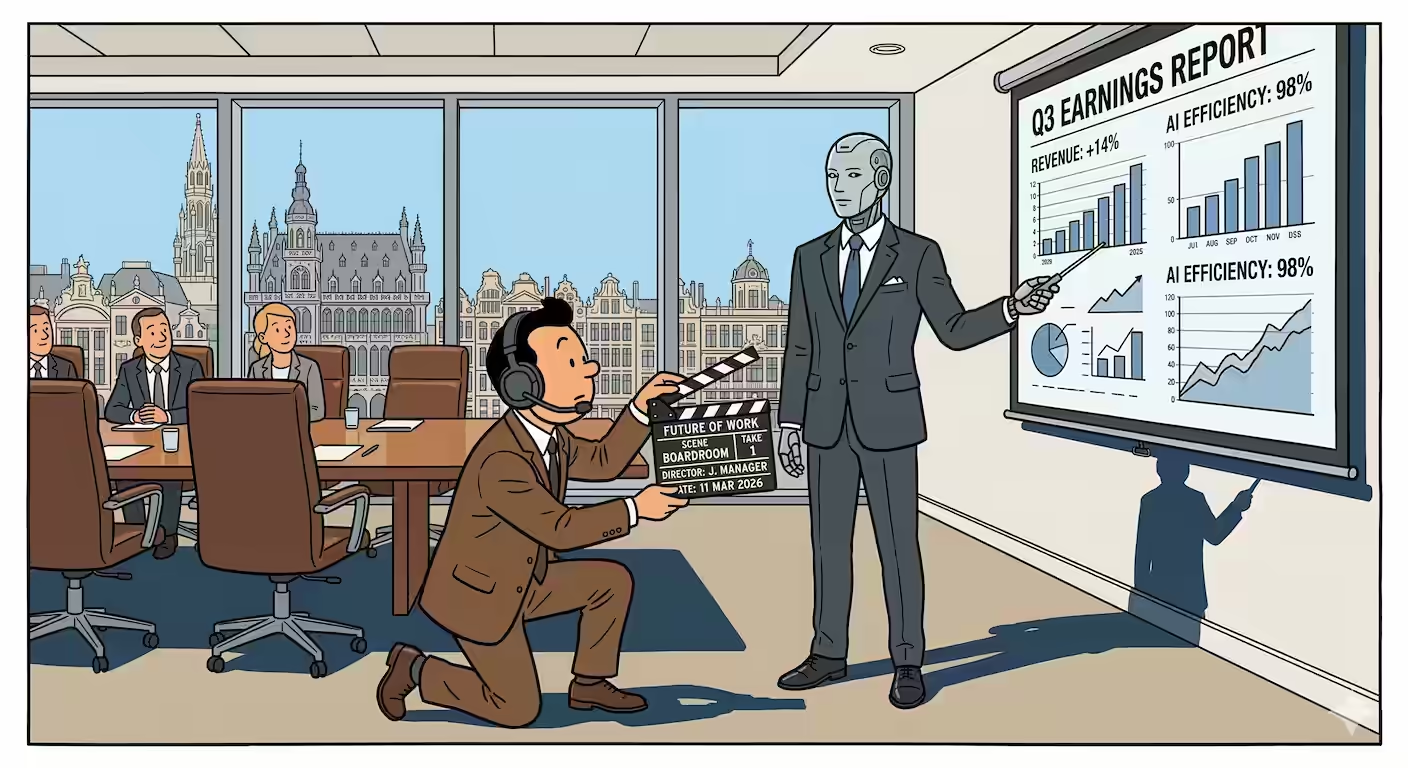
I often research how the world will change with AI by asking AI. Today’s session was informative. I asked Claude, roughly Economics changes human behavior. As intelligence cost falls to zero, here are some changes in my behavior [I listed these]. Others will have experienced behavioral changes too. Search online and synthesize behavioral changes. It said this. 🟡 People spend time on problem framing & evaluation. AI can execute the middle. (I’m OK at this. Need to do more framing + evaluation.) 🟢 People don’t plan, they just build. (I’m prototyping a lot.) 🟢 People build personal data & context. (I’m mining my digital exhaust.) 🔴 People queue work for agents, delegating into the future. (I’m not. I need to do far more of this.) 🟢 People shift from searching to asking for answers. (I do this a lot, e.g. this post.) 🟡 People are AI-delegating junior jobs and developing senior level taste early. (Need to do more.) 🟡 People treat unresolved emotions as prompts. (Need to do more.) Rough legend: 🟢 = Stuff I know. 🟡 = I kind-of know. 🔴 = New learning. ...

Recording screencasts

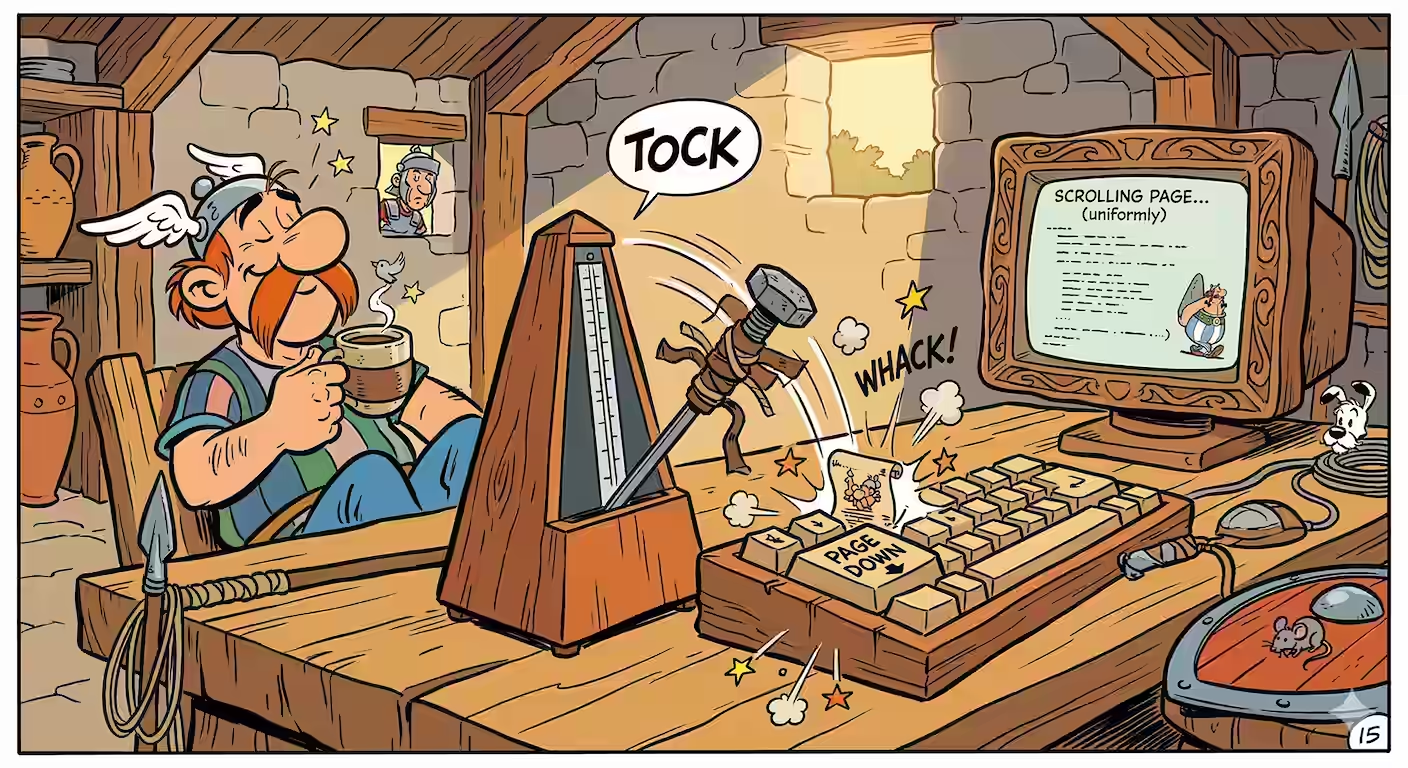
Since WEBM compresses videos very efficiently, I’ve started using videos more often. For example, in Prototyping the prototypes and in Using game-playing agents to teach. I use a fish script to compress screencasts like this: # Increase quality with lower crf= (55 is default, 45 is better/larger) # and higher fps= (5 is default, 10 is better/larger). screencastcompress --crf 45 --fps 10 a.webm b.webm ... To record the screencasts, I prefer slightly automated approaches for ease and quality. ...

White Pebble Black Pebble

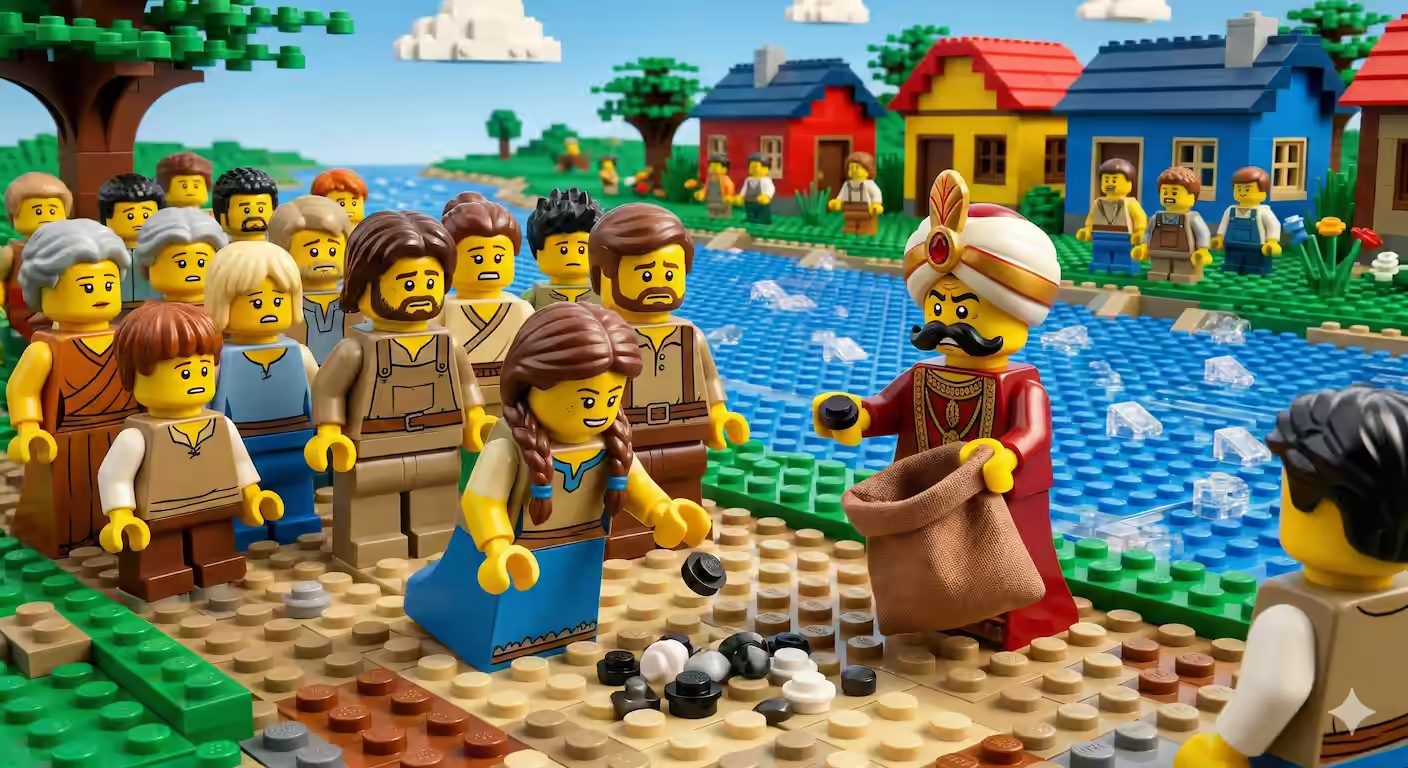
When I was in class 8 or 9, our English teacher told us a story I’ll never forget. There was a poor farmer who lived in a village. He owed the zamindar (landlord) of the village a lot of money. The zamindar had an eye on his daughter. “Marry your daughter to me, and I’ll forgive your debt,” he said. The farmer was reluctant. “Please, sir, what will the village say about your marrying such a young girl?” he asked. ...

Birthday Sandwich Cake

It’s not every day your daughter turns 20. But it is nearly every day that annoying commitments stop you from doing important things - like buying the birthday cake and candles - especially when my wife is traveling. So, late at night, after useless meetings and well after when shops close, I asked Claude (the most creative of the lot): I have bread, Nutella, peanut butter, jam, and the usual household supplies. How can I celebrate my daughter’s 20th birthday with a birthday cake using stuff like these? Any creative ideas? ...

Repurposing blog posts for talks

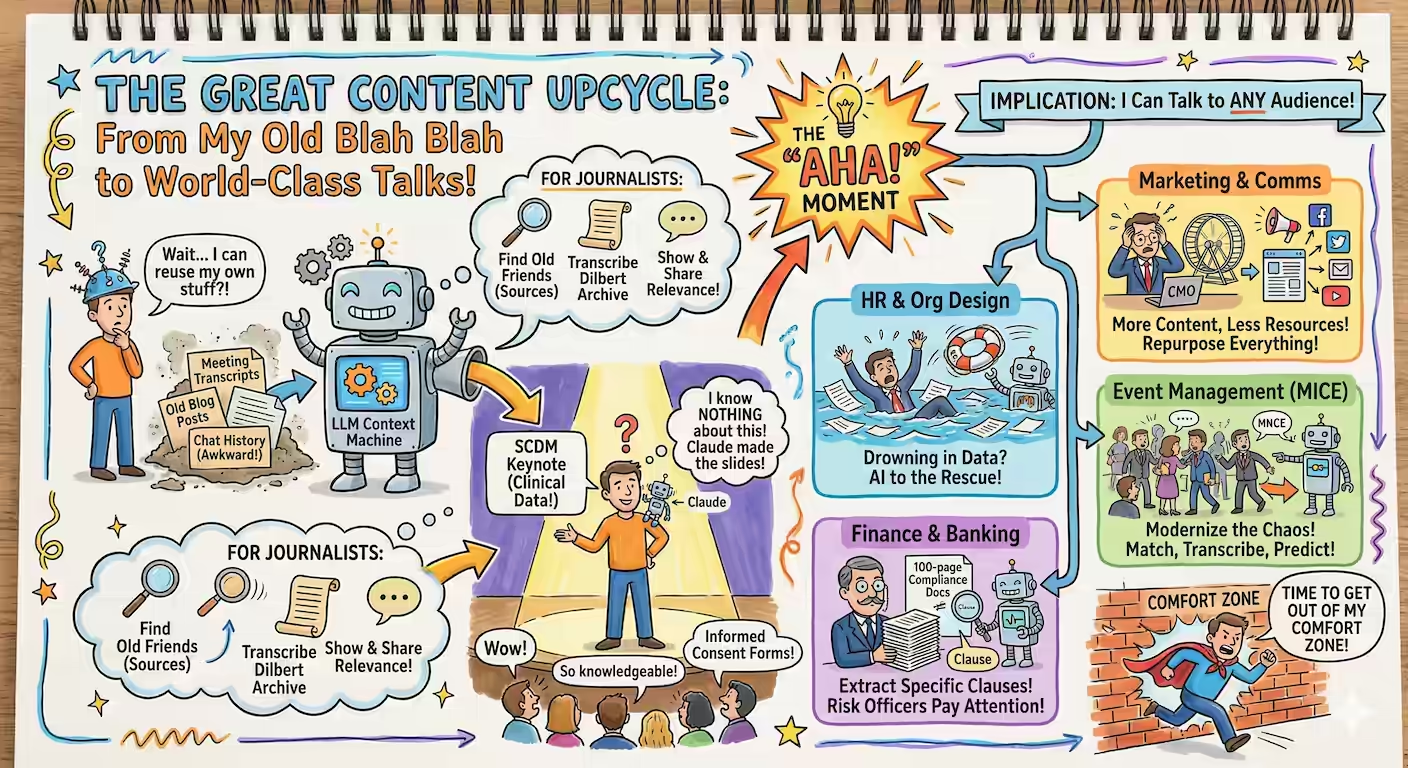
Recently, I’ve re-used my own writing / transcripts as context to LLMs. For example, I’ve used: My meeting transcripts to answer interview questions My blog posts to write news articles My chat history to extract AI-related advice This repurposing can be used for so many things. For example, before delivering a talk to journalists “Review my Feb 2026 LLM posts and generate a single-sentence, ELI15 high-impact use case for journalists.” gets me list of use cases. Now, all I have to do is show what I did and share how it’s relevant for them, like: ...

Using browser history as memory

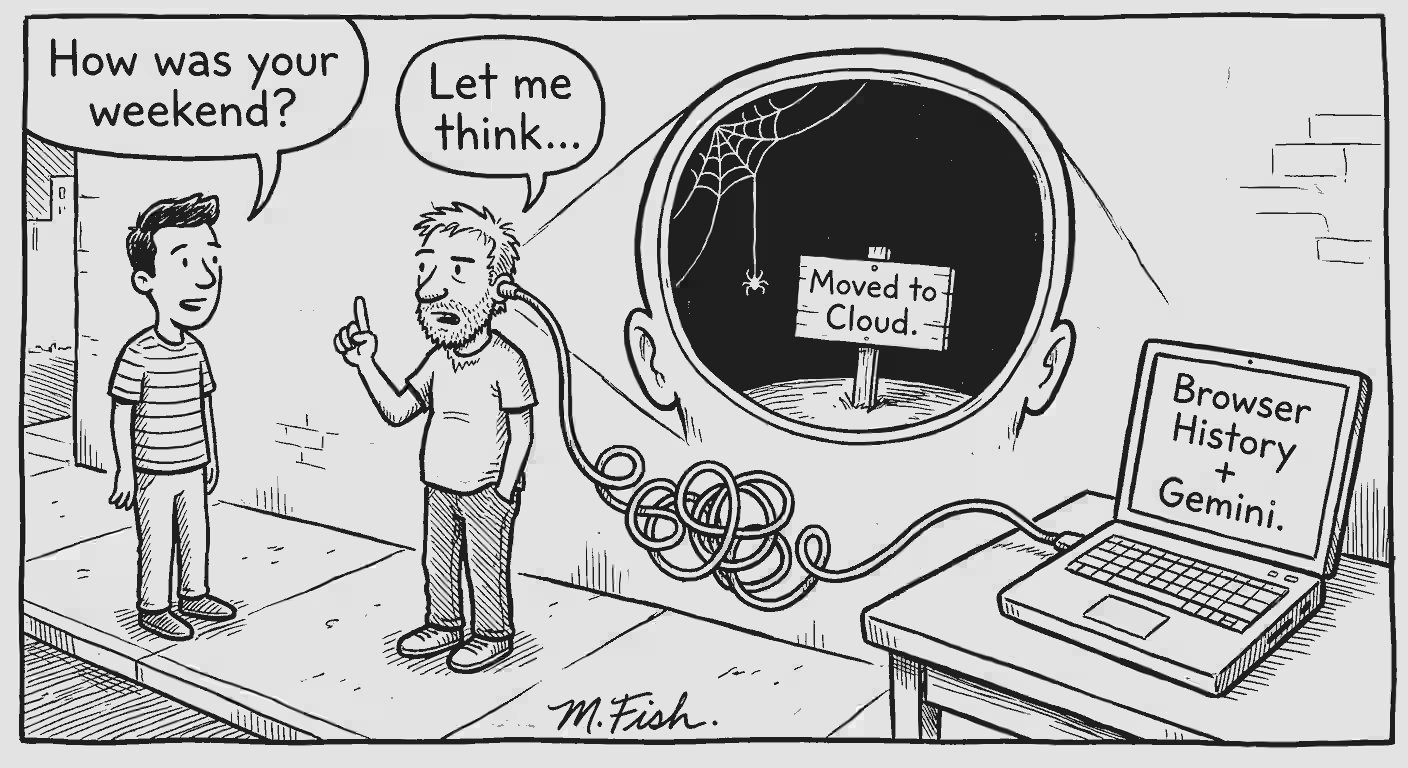
I have a bad memory. (I need to write about that. I k eep forgetting to.) It’s worsening. Yesterday, I misplaced my debit card for the first time. Or maybe the second…? Which reminds me, I just forgot a call I have now! (Panic.) (15 min later.) So, anyway, therefore, I log stuff meticulously. Like what I did each day, what I ate, what I weigh, what pained me, etc. But the best logging is automated. My phone logs where I am. My bank logs what I spend. My calendar logs who I meet. ...

Submitting an AI-ded VizChitra Proposal

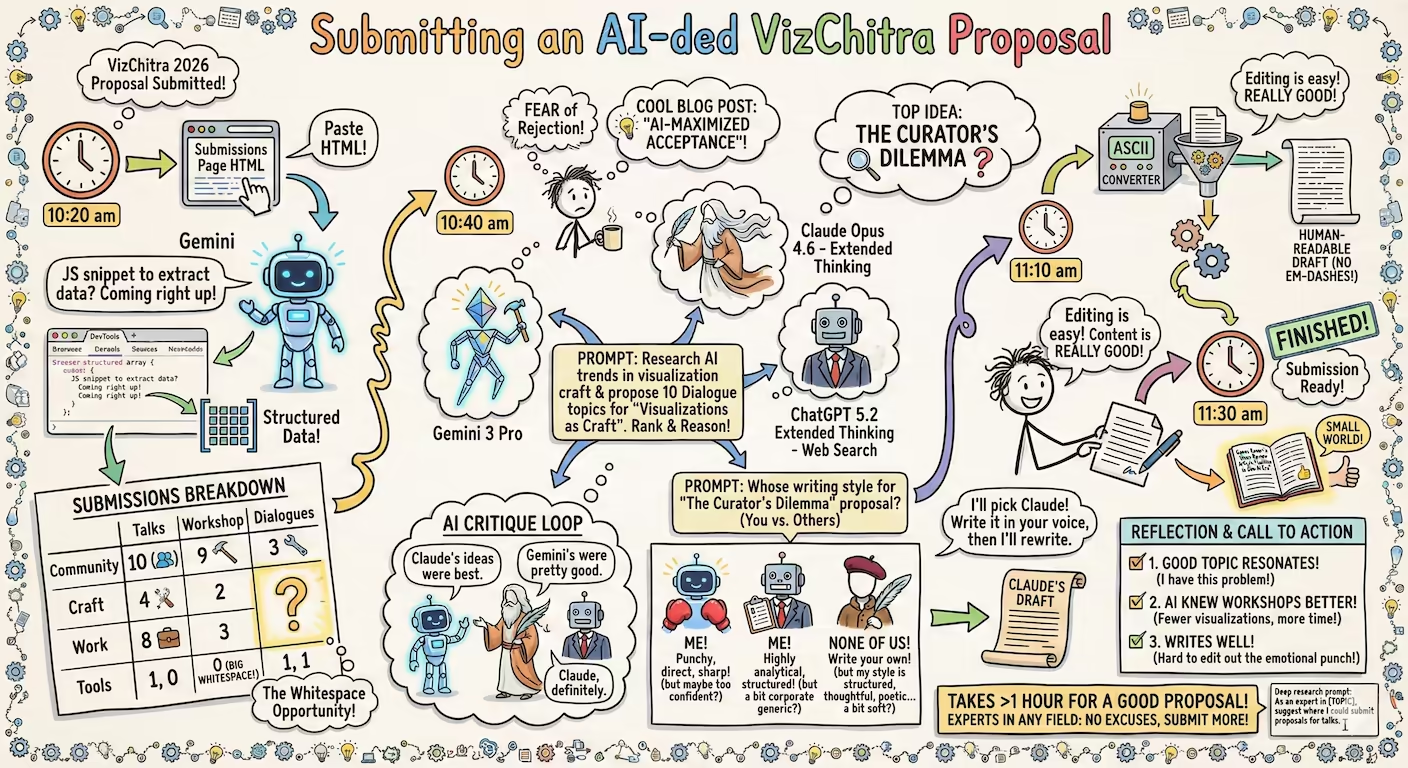
10:20 am. After submitting my VizChitra 2026 talk proposal, did a quick analysis of the submissions. Copy the HTML from the submissions page and paste into Gemini. Ask it: “Given this HTML, share a JS snippet I can copy and paste into DevTools that will return an array of objects containing all the useful information about each submission.” Paste the JS snippet into DevTools and get the structured result. Here’s the breakdown of submissions (excluding exchibitions): ...